Projects

A decade of building tools for people who build things.

Work
KOPE 2022 – 2026

Configurator platform for industrialized construction
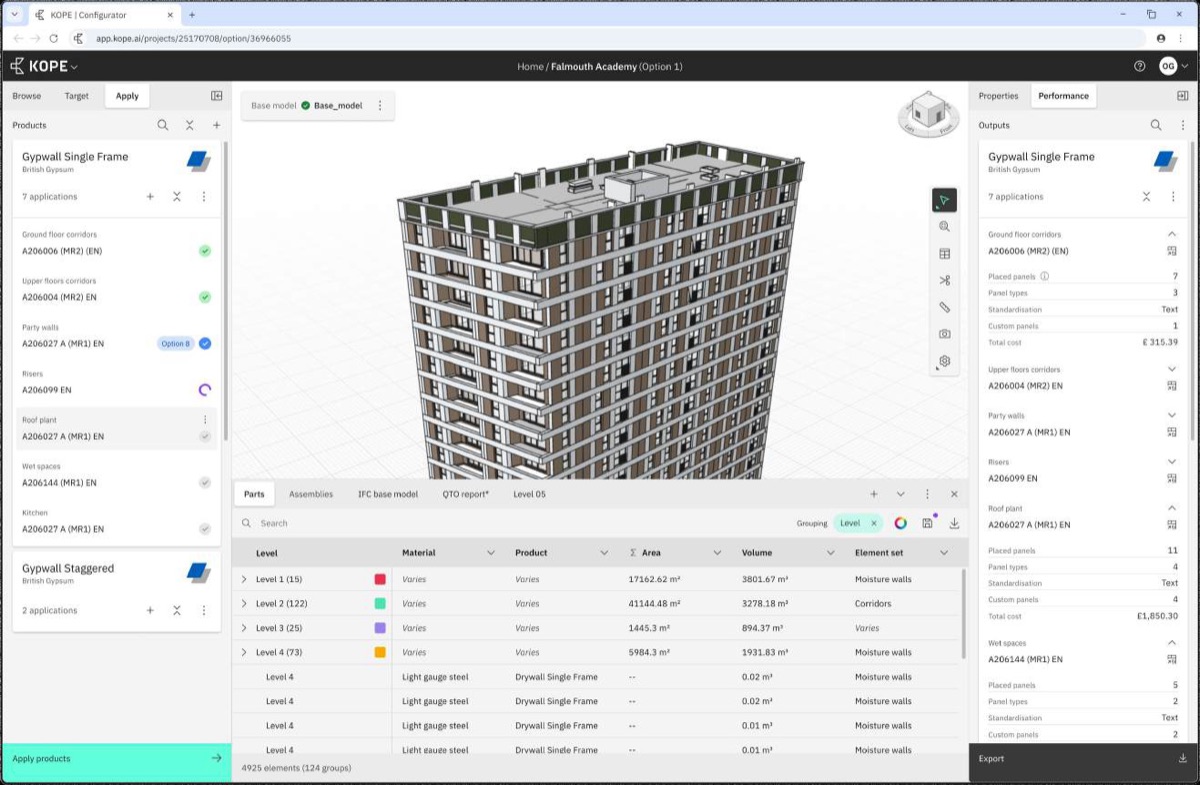
The KOPE configurator: a building model in the 3D viewer with product applications and the datatable open

KOPE is a multiplayer B2B SaaS platform for offsite construction, built around a highly performant Three.js viewer optimised for large, detailed building models.

At its heart, it lets users apply a library of configurable construction products to their building designs, resolving them to a manufacturing level of detail within minutes — each product carrying the logic, options and limitations of its manufacturer.

I joined when it was marketed as a generic workflow automation tool and pitched the reframing we never looked back from: a place for the industry to simply apply products to their projects.

Since then I've led the platform team and owned the vision, roadmap and design of the flagship app — entirely no-code product build-up, a flexible datatable for interrogating and visualising data, side-by-side design option comparison, multi-objective evolutionary optimisation, and most recently a suite of 3D model editing tools.

KOPE Market 2021 – 2026

International marketplace for offsite construction
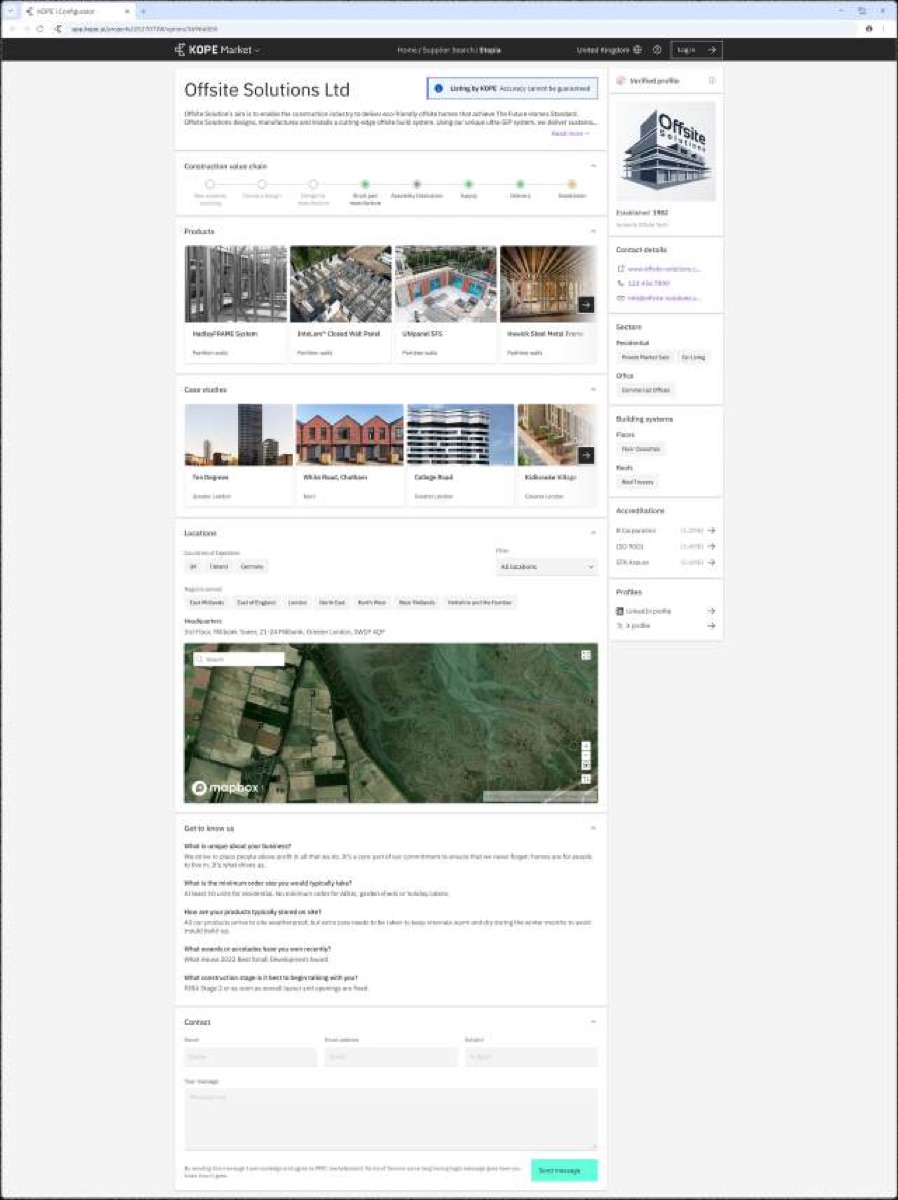
A manufacturer profile page on KOPE Market showing products, case studies and locations

The marketplace began as a research task: within a month I'd amassed an enormous database of interconnected datapoints — people, places, media, manufacturers, exemplar projects and software.

We launched it as a standalone, open and free website, bringing transparency to construction's infamously opaque supply chains while acting as our startup's advertising engine.

I led its development from day one: designing the responsive site, writing all requirements, even specifying the database tables. Today it's fully internationalised and white-labelled — including a version delivered to the NHS New Hospitals Programme — with thousands of products searchable across international certification standards.

Dynamo UI Rebuild 2021

Contract UI rebuild of visual programming software, for Autodesk
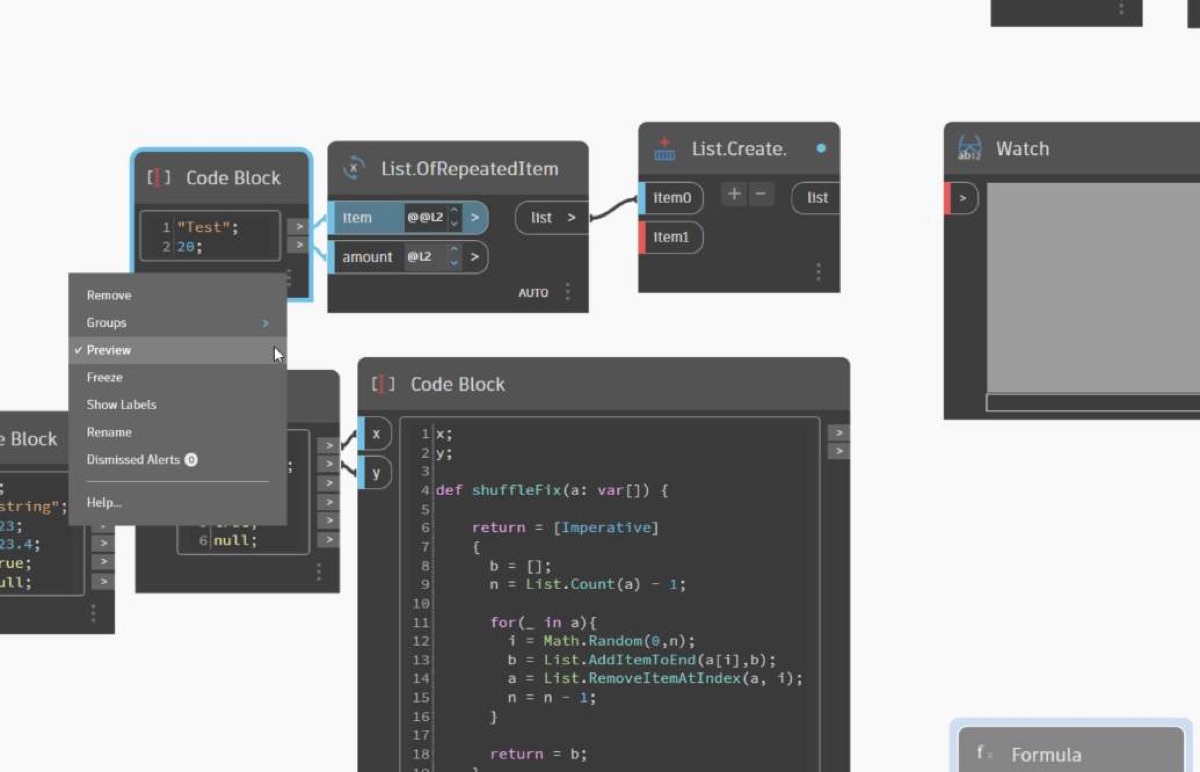
The rebuilt Dynamo node interface showing code blocks, node connections and context menus

A full-circle moment: I first learned to program in Dynamo's interface, and much of this contract's initial workload came from feature requests I had logged on GitHub years earlier.

Working with Autodesk's product and UI team, I rebuilt the core app UI — the highly configurable node UI, the node library and search, much of the package manager, and a new hierarchical warning system — in XAML, C# and WPF's MVVM architecture, with every build subjected to over 10,000 tests.

The richer UI initially brought a performance hit ("Dynamo is pushing the reasonable limits of what WPF can achieve"), so I profiled it with dotMemory until the rebuilt app outperformed the old one. Autodesk offered me a job afterwards — but my heart was set on product management.

Homegrown 2019 – 2020

Machine learning apartment recommendation
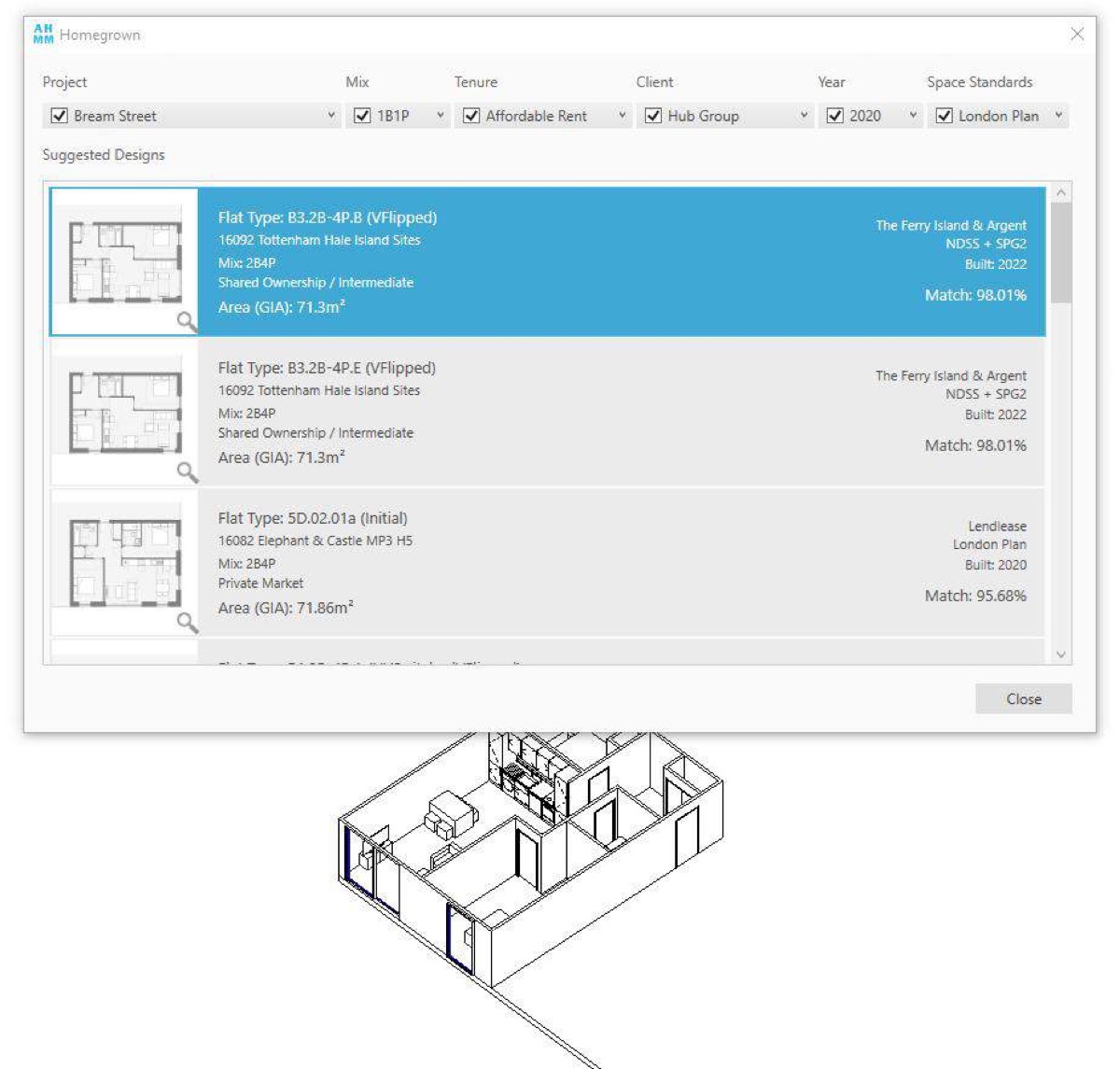
Homegrown's suggested designs dialog in Revit, ranking previously built apartment layouts by match percentage

Automated space planning has been discussed for decades — physics-based systems, Bayesian analysis, evolutionary algorithms, deep learning — yet architects were still designing apartments manually. Homegrown took a novel approach: instead of generic spatial intelligence, work backwards from the firm's own library of built apartment designs.

The result is a recommendation engine that recognises similarity between spaces regardless of size, shape, mirroring or rotation, delivered as a Revit plugin with zero setup.

Click inside any space and it presents ranked, previously-built layouts, reconstructing the chosen one in seconds with approved 3D content and best-practice metadata. It went viral in the construction-tech space and became a research paper at UCL's first DC I/O conference.

AHMM Tools 2017 – 2021

Custom design and workflow tools for architects
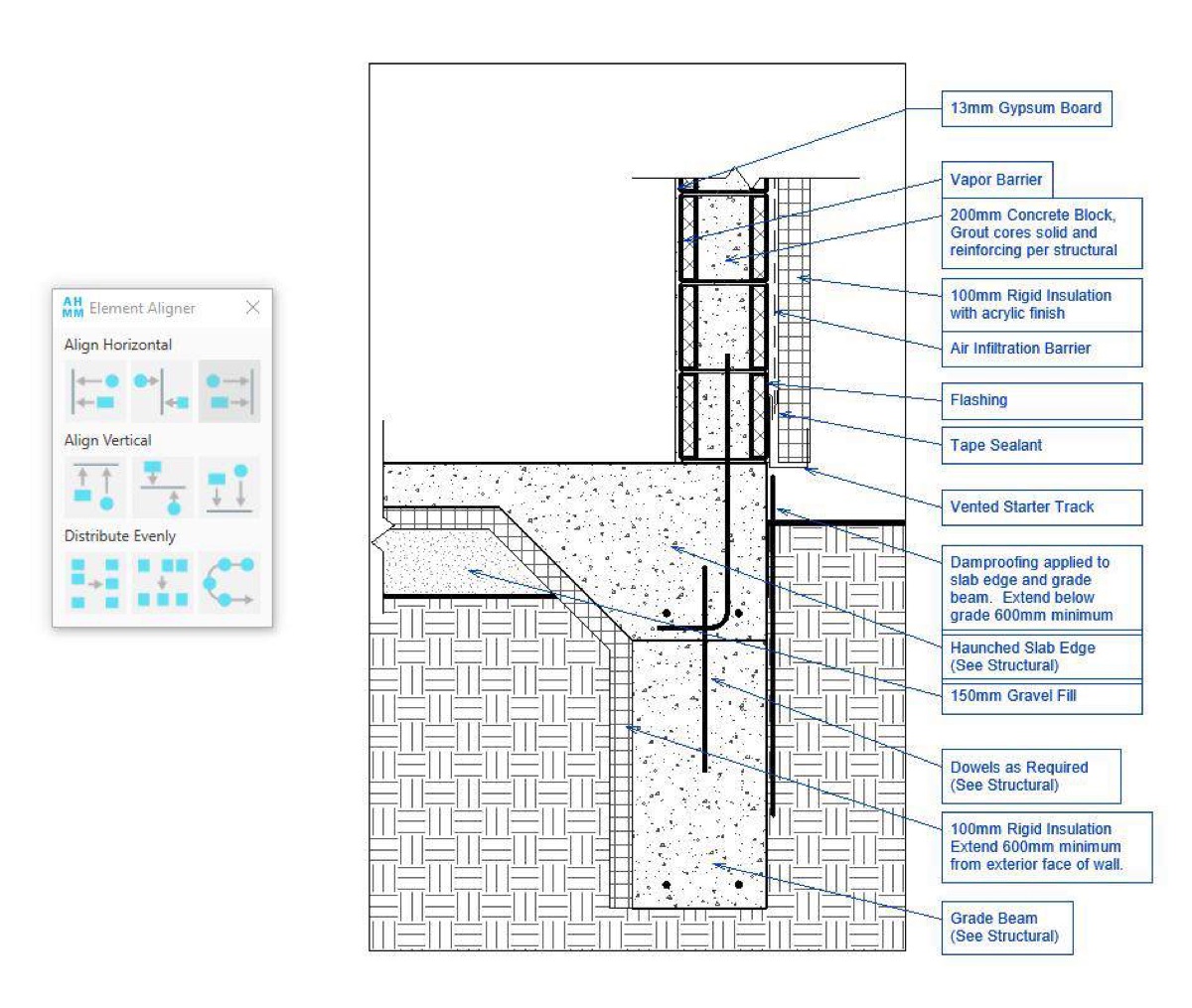
AHMM Tools: the element aligner palette beside an annotated construction detail

Four years of building whatever AHMM's project teams needed, distilled into a plugin deployed to every architect across multiple international offices.

The greatest hits: an element pre-delete tool showing the knock-on consequences before you break something, an embodied carbon calculator aligned to RICS categories, model issue validation and stripping, geolocation setup, aligners and distributors, data validation checks and instant guidance search.

Beyond the plugin, I built automation bridging Revit to InDesign, Excel, SQL databases and local knowledge stores — code-signed, silently deployed, and reporting telemetry so our Digital Design Group understood how each tool was actually used.

Computational Chandelier 2017 – 2018

Math-driven artwork for Broadgate, with sculptor Vlad Tenu
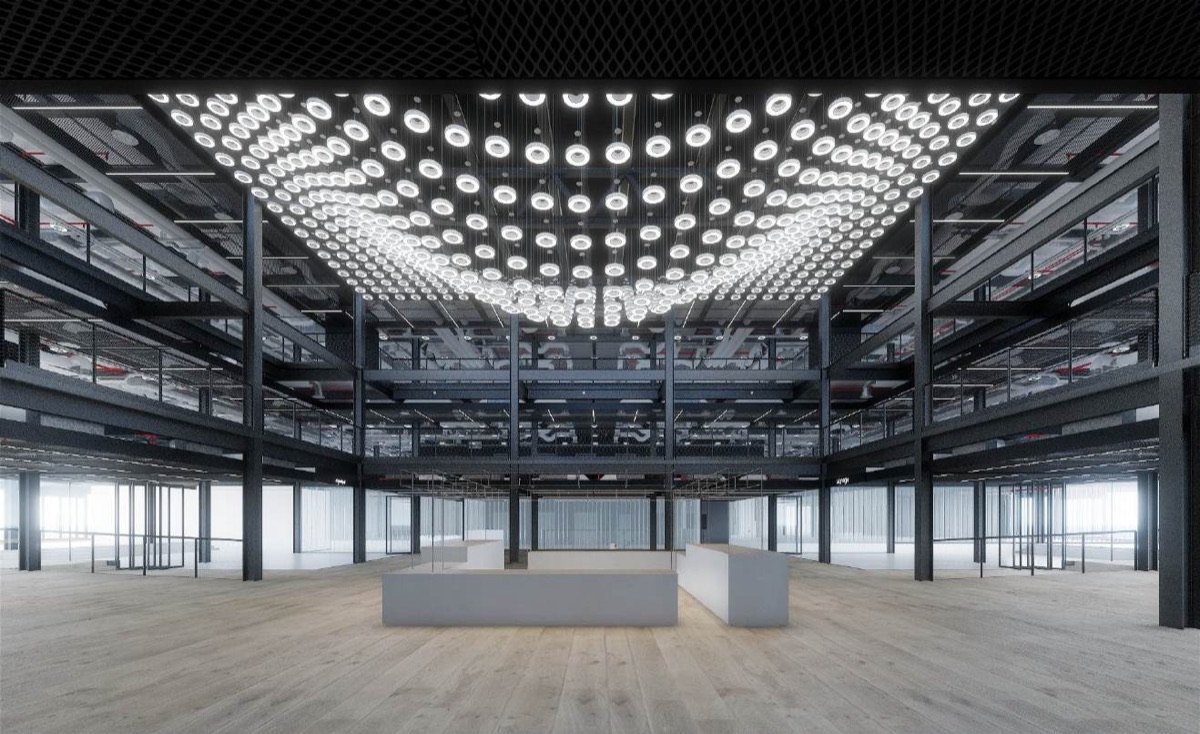
The finished Broadgate lighting feature: hundreds of suspended ring lamps forming a rippled canopy in an atrium

Sculptor Vlad Tenu asked me to build a custom tool to explore ideas for a large lighting feature — the centrepiece of a Broadgate fit-out. We devised a math-driven approach: two colliding sine waves with an exponential function controlling sculptural tension, tunable by lamp density, curve steepness, offsets, depth, even colour temperature.

Paired with Dynamo and Enscape, the workflow let the sculpture be shaped in real time using VR, ensuring the form worked within the tight lobby space.

Facade Explorer 2018 – 2019

Instant VR concept optioneering tool

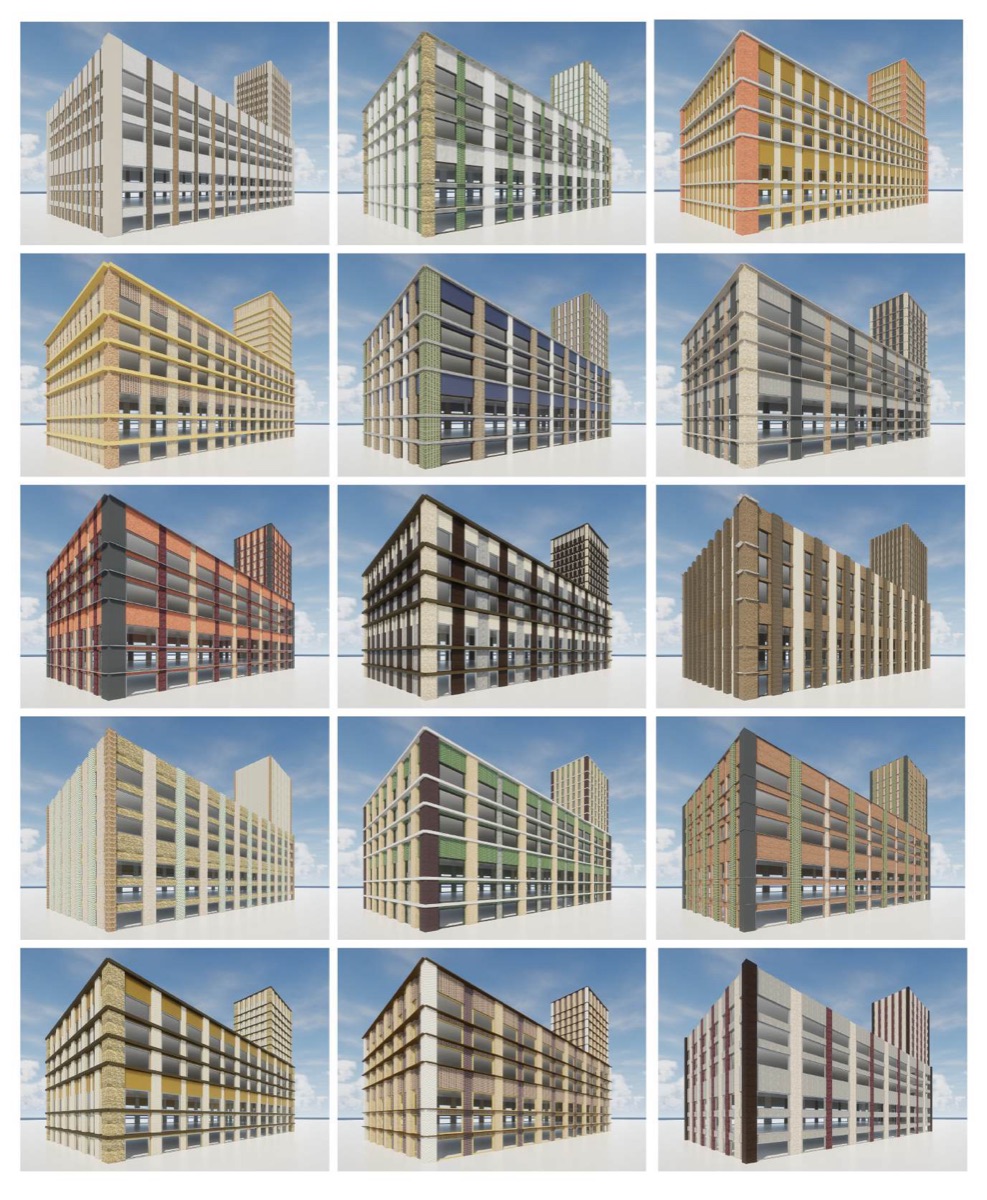
A matrix of fifteen generated facade options in different materials and colourways

An opportunistic mash-up of technologies built for early-stage project bids: a rule-driven Revit family generating an L-System facade with over 60 instance parameters, a Dynamo script recreating the optioneering spirit of Autodesk's Fractal, and Enscape delivering bid-quality visuals.

A happy side effect: it ran in VR through a game engine, so users could walk around a facade while trying new options every few seconds — 'locking' features they liked and exploring an enormous design space in a playful, engaging way.

Open Source

Dynamo Python Primer 2019

Guidance passion project

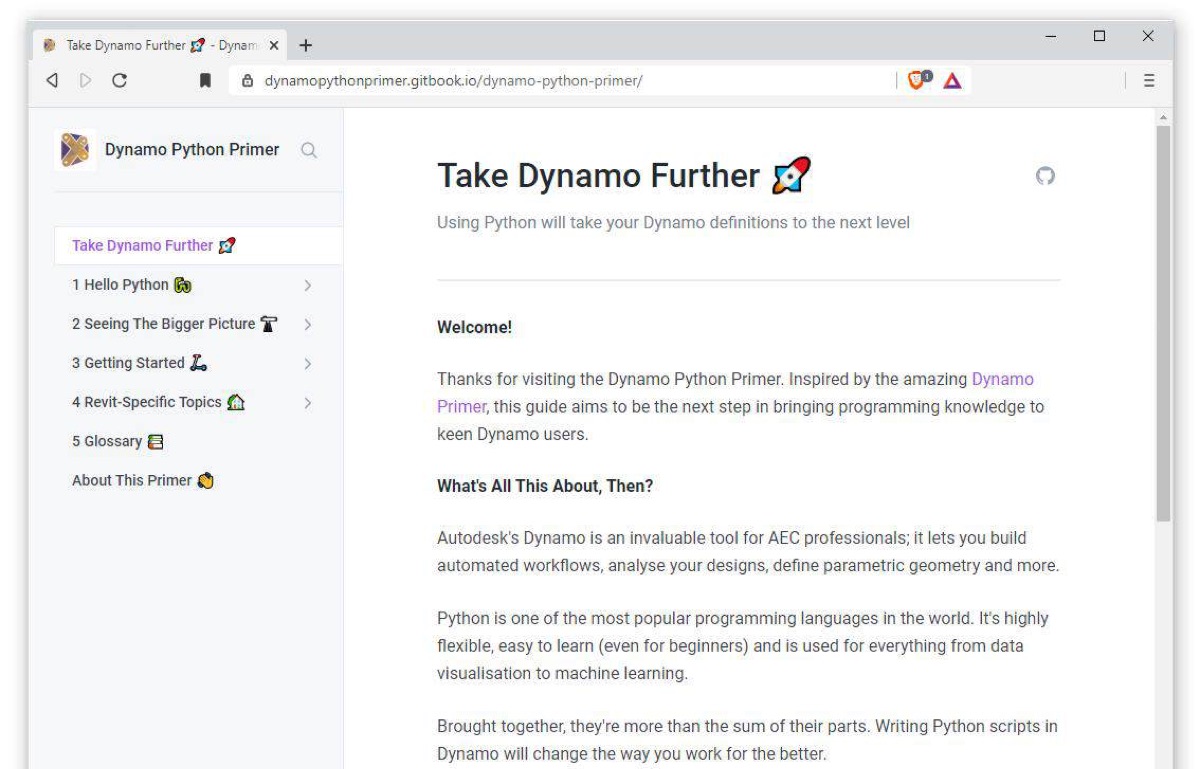
The Dynamo Python Primer on Gitbook, open at its welcome page

Many capable Dynamo users struggle to make the jump from node-based usage to Python and API calls — not because Python is hard, but because nobody explained how IronPython works or what .NET even is.

Over Christmas 2019 I wrote an open-source guide covering all the knowledge I'd found hard to come by.

It's been visited tens of thousands of times and was eventually merged into the official guidance by Autodesk.

Regular 2019 – 2020

Intuitive data validation for architects

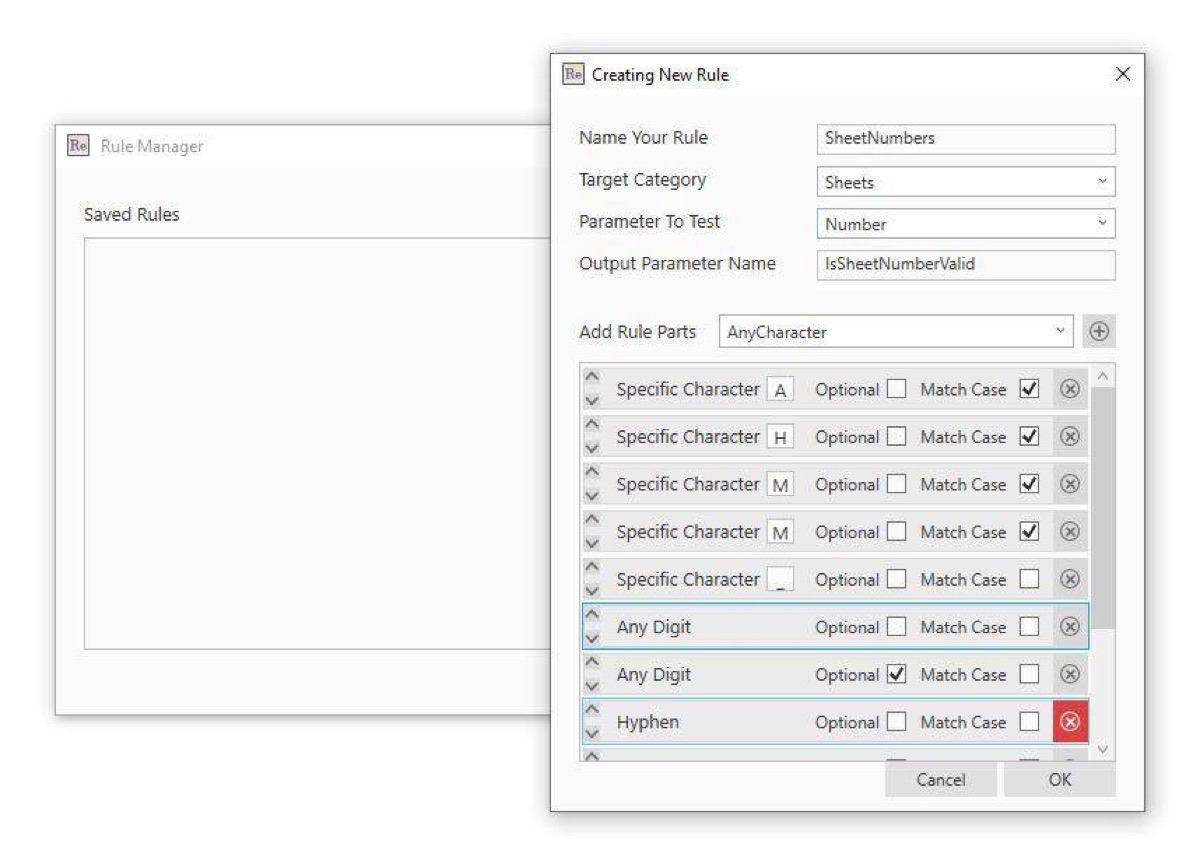
Regular's rule manager: building a plain-English data format rule from parts like 'Specific Character' and 'Any Digit'

Regular expressions are brilliant for data validation and miserable to write (even for many programmers).

Born at the 2019 AECTech Hackathon, Regular brings their benefits to non-coders: define data format rules in plain English through an intuitive UI, and the plugin silently translates them into regex.

Rules live inside Revit models via the Extensible Storage API, and the Dynamic Model Updater validates data continuously against them — flagging each element's compliance with your standards as you work.